

Ask any devoted Shiv bhakt what their greatest wish is, and the answer will always be: visiting all 12 Jyotirlingas and completing the Char Dham Yatra. They are considered to be two great pilgrimages of a lifetime – the kind that really reshapes something inside you and makes the ordinary world feel different when you return to it.
A Jyotirlinga is a place where Lord Shiva himself erupted from the earth as a column of infinite light, a jyoti, a flame without beginning or end – and then chose to remain.
According to the Shiva Purana, Brahma and Vishnu were locked in a dispute over who held the supreme power in the universe. Shiva just appeared between them as a blinding pillar of fire, challenging each to find its origin. Brahma flew upward as a swan, Vishnu dove downward as a boar. Neither found the end, both just conceded. The flame became stone, and all across twelve sacred sites in India, those stones became the 12 Jyotirlingas (the holiest shrines).
Visiting all twelve is considered one of the most spiritually complete acts a devotee can undertake in a lifetime. Each Jyotirlinga carries its own mythology, its own specific energy, and its own landscape. Together, they form a map of Shiva’s presence all across the subcontinent – from the Arabian Sea coast of Gujarat to the Himalayan heights of Uttarakhand.
The 12 Jyotirlingas: Let’s Take A Closer Look
1. Somnath Jyotirlinga – Prabhas Kshetra, Gujarat
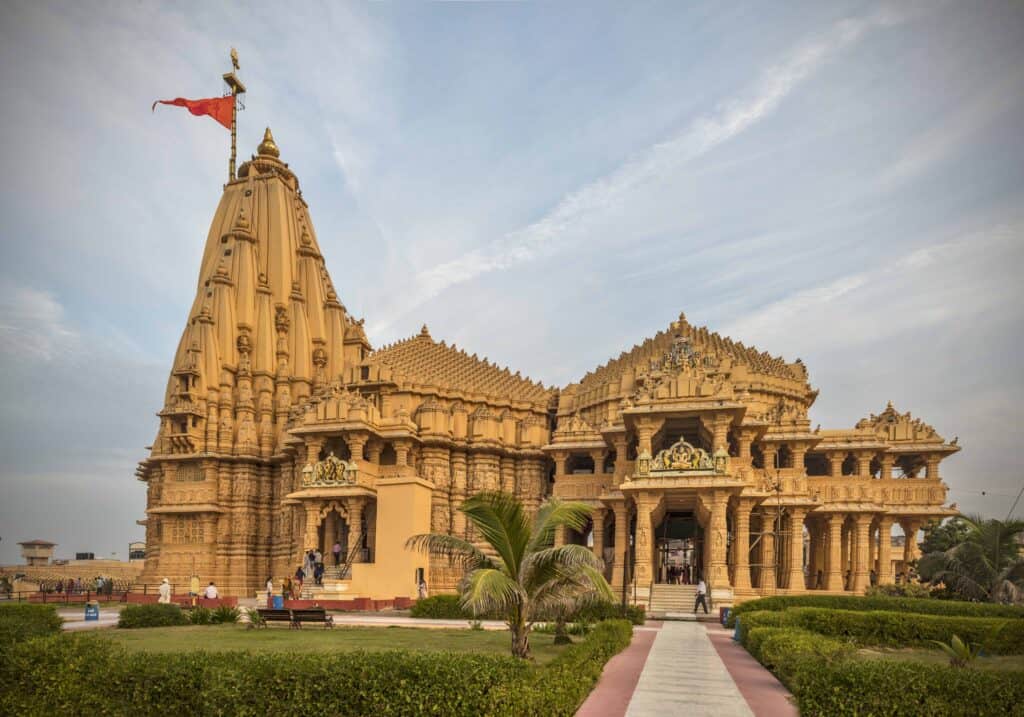
Somnath Jyotirlinga is located at Prabhas Kshetra, Gujarat.
Here, the moon god Chandra prayed to Shiva, who cursed him by his father-in-law, Daksha, to wane into nothingness, but Shiva granted him partial relief, waxing and waning for eternity, never dying.
Somnath is located at the sea shore of the Arabian Sea, and the waves have been a part of its worship since time immemorial. The temple has been demolished and resurrected 17 times over the years: once by Mahmud of Ghazni, once by Aurangzeb, and once by the passing of the centuries; each time, the faithful have returned and built it up again from the ground. That stubbornness is like Shiva himself. Somnath will not back down. It simply continues.
Best season to travel: October – February. The sea breeze has brought temperatures to a comfortable level, and the light at dawn in the temple is a sight to behold.
2. Mallikarjuna Jyotirlinga – Srisailam, Andhra Pradesh
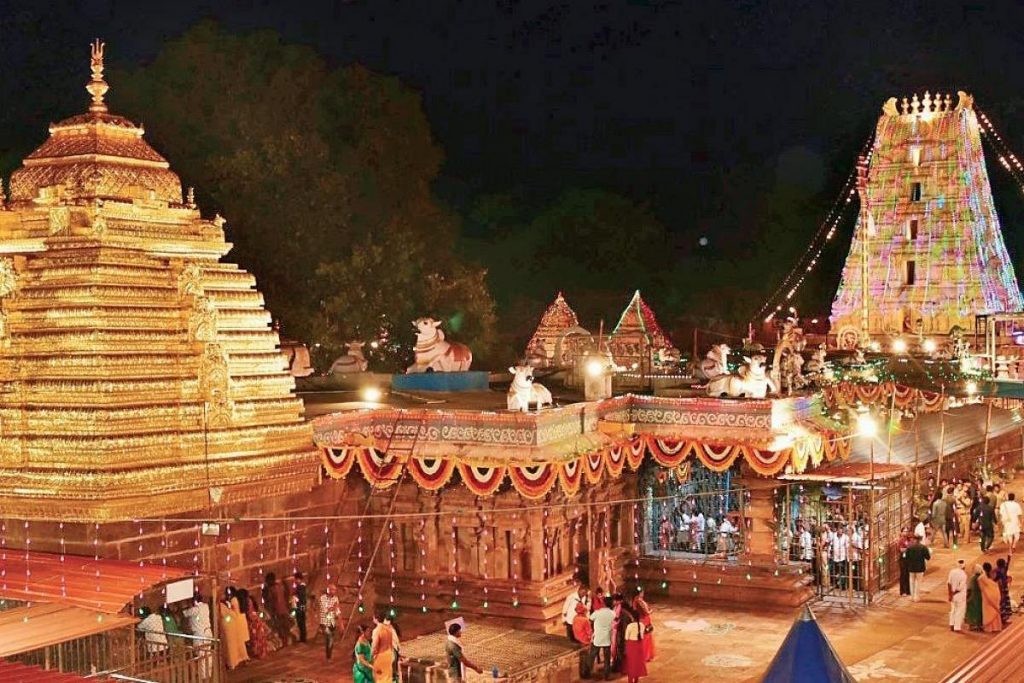
Kartikeya was enraged to leave Mount Kailash after losing the circumambulation competition with Ganesha, and in grief and love, Shiva and Parvati moved to this place as Mallikarjuna (Shiva) and Bhramaramba (Parvati), respectively.
Srisailam is nestled in the forest hills, and approaching Srisailam feels like you’re stepping into another world: trees, birds, the rushing noise of the Krishna River below. Mallikarjuna is situated in a remote location, far from the hustle and bustle of city life, unlike most Jyotirlingas. The pilgrims who visit here repeat that they feel they are very far from the ordinary world and very close to something fundamental.
Best seasons to visit: October to March. Try not to go in the summer – it can be quite hot in the forest.
3. Mahakaleshwar Jyotirlinga – Ujjain (Madhya Pradesh)
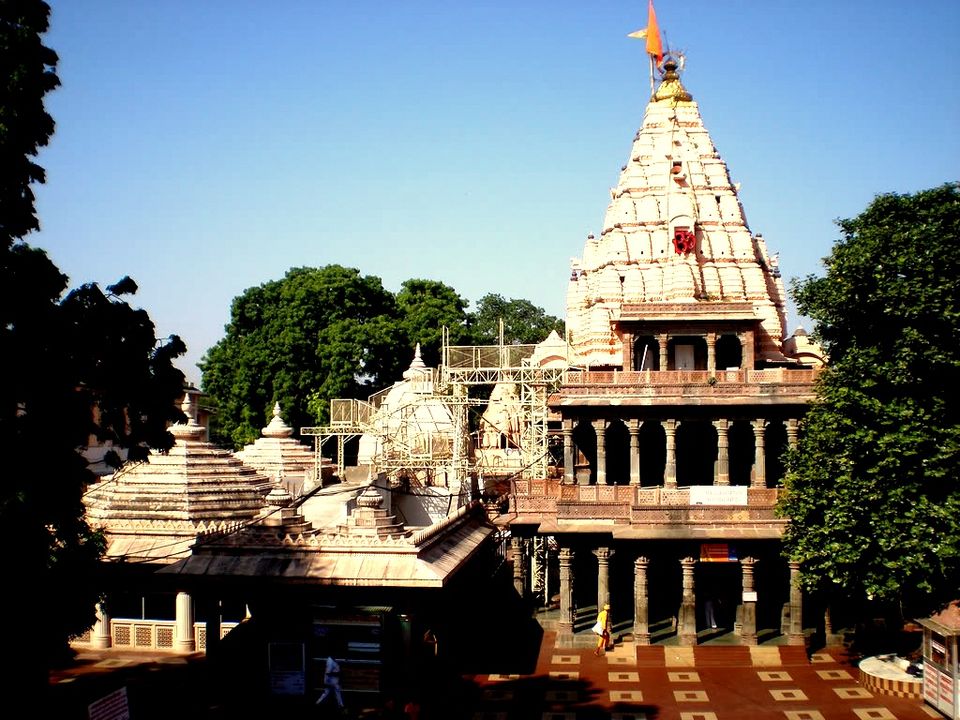
Here, Shiva is known as Mahakala, or the lord of time and death, who ended up defeating the demon Dushana, who terrorized the people of Avanti, and is still here as the city’s eternal protector.
Ujjain is one of the seven sacred cities of India, and Mahakaleshwar is the heart of Ujjain. This is the only south-facing Jyotirlinga that is one of the twelve Jyotirlingas, which is regarded as one of the most powerful ones in the tantric tradition. One of the most moving rituals in all of India is the Bhasma Aarti, which is performed at dawn, and the Lingam is smeared with sacred ash in the half-dark. It is a time when incense and chanting permeate the air, and even at this early morning, the old stone is warm.
Best season to visit: October to March. For Bhasma Aarti, one has to get up early in the morning – book passes early.
4. Omkareshwar Jyotirlinga – Khandwa District, Madhya Pradesh
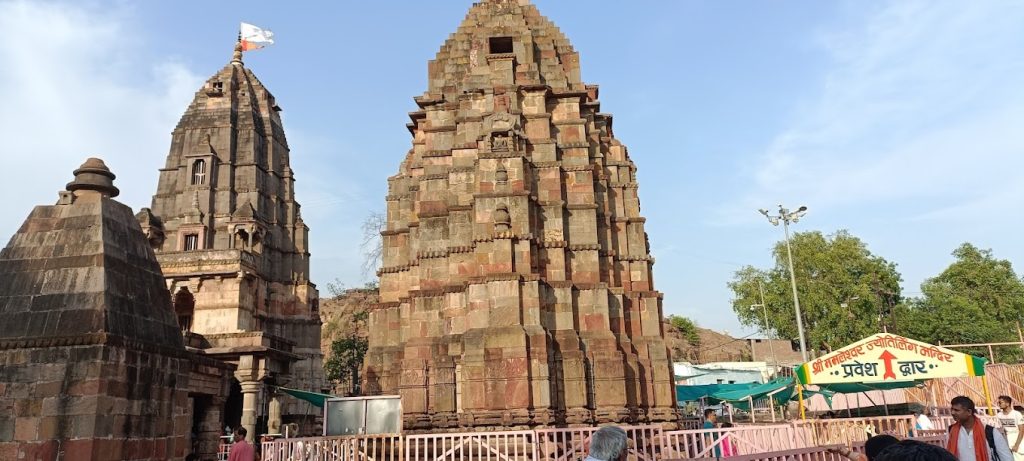
Omkareshwar, on an island formed by the Narmada over many years to be the shape of the most sacred syllable, is one of India’s holiest rivers. There are two temples here, Omkareshwar and Amareshwar, which are considered part of the same Jyotirlinga. A circumambulation walk around the island (with river on all sides and temple bells floating on the water) has a soothing effect that’s quite different from any other walk around the Jyotirlinga circuit.
This temple is located on an island in the Narmada River, which is naturally shaped like the Sanskrit symbol Om – so perfect that it has been deemed sacred for thousands of years.
Best seasons to visit: October to March. During the monsoon, the river is significantly raised, rendering some parts of the island impassable.
5. Kedarnath Jyotirlinga: Uttarakhand, The Himalayas
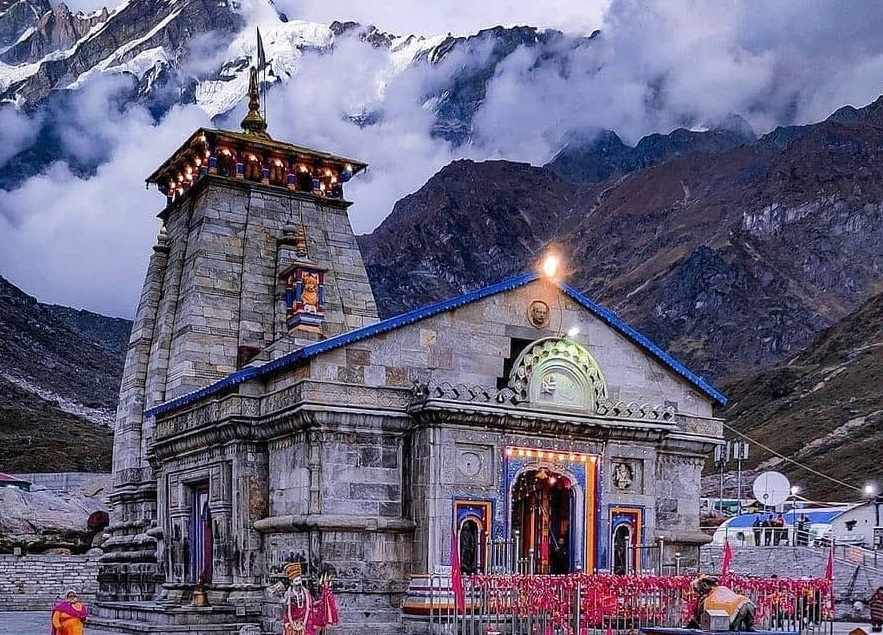
The last Jyotirlinga in the Himalayas. The sole Jyotirlinga, which is also Char Dham.
The Pandavas approached Lord Shiva with the request for absolution after the battle of Kurukshetra. Lord Shiva, who was not willing to give the absolution readily, transformed himself into a bull and went into the ground at Kedarnath, and Bhima picked up the hump of the bull, and the hump turned into the sacred lingam, which is worshipped by the pilgrims even to this day.
Kedarnath is the Jyotirlinga at the end of the end. The old stone temple is located at a height of 3,583 metres above sea level amidst glaciers, and presided over by the Kedarnath Peak, which means ‘lord of Kedarnath’. There is no show here, nor is there any decoration, nor is there any mellowing. Only rock, cold, altitude, and one of the most intense manifestations of the Divine will be found by any pilgrim anywhere.
Kedarnath is unique among the twelve Jyotirlingas as it is one of the Char Dham (4 sacred shrines of Uttarakhand) whose circuit is considered the most complete pilgrimage in Hinduism. The standing of Kedarnath is the standing at the intersection of two great journeys. When pilgrims return, it’s said that they bring back something from this place that they can’t put into words.
How to reach Kedarnath: The traditional trek from Gaurikund, 16 kilometres, is achievable but challenging and weather-dependent. Several devotees nowadays undertake Char Dham Yatra by helicopter with Vaayu Aviation, flying from Dehradun to a base helipad, and after having a shuttle service for seven minutes, they walk a distance of 500 metres to reach the shrine. This is the path that makes it real for anyone who desires this Darshan but can’t do it in person, for families that have older people, or for NRIs who don’t have a lot of time.
Best time to visit: May to June and September to October – when the temple is open. Kedarnath will be released on 2nd May 2026 for this season.
6. Bhimashankar Jyotirlinga – Pune District, Maharashtra
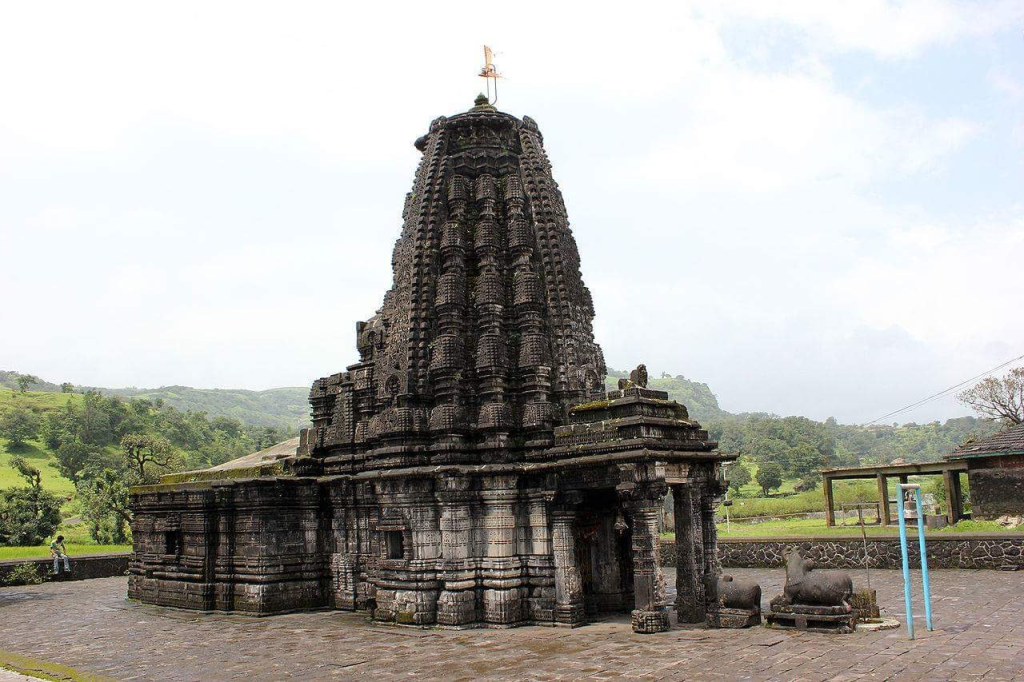
The route to Bhimashankar goes through thick forest patches of the Western Ghats, and the wildlife sanctuary encircling it is also the habitat of the rare Shekru, that is the giant squirrel of Maharashtra. This Jyotirlinga is wild, while the others are not. Forest sounds bring the air back to life, and it’s cooler. Early morning devotees who go for darshan in the low clouds that cling to the hillside often walk through, and the illuminating light of the temple remains.
Here, Bhima, son of the wind god Vayu, grew up without knowing his father; when he found out, he killed the demon Tripurasura, and Lord Shiva came in the form of Bhimashankar to bless him.
Best time to visit: October to March. The forest is a place of great beauty, but the monsoon can make some trails challenging.
7. Kashi Vishwanath Jyotirlinga – Varanasi, Uttar Pradesh
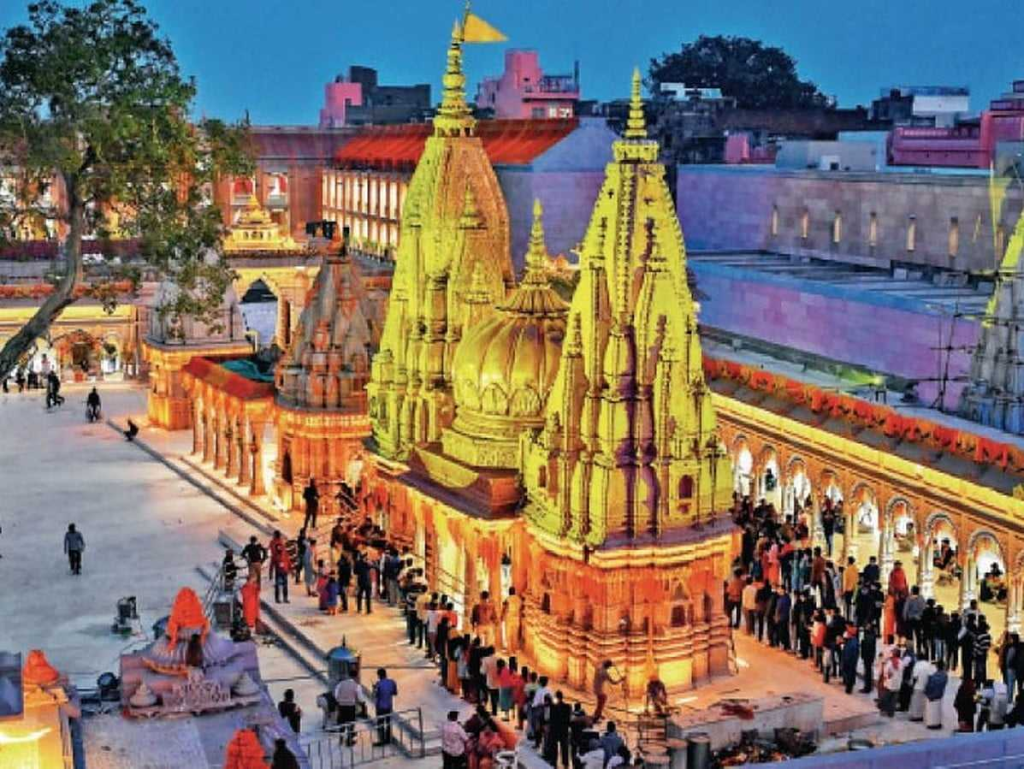
Varanasi is the city of Shiva – the city he never leaves, the place that he holds on the tip of his trident even during the dissolution of the universe.
Kashi Vishwanath is at no.1 in the list of sacred places in India. The temple is located in the narrow streets of Varanasi, the most active and most death-acquainted city in the world. This temple is the confluence of all the elements of the Ganga ghats, the burning pyres of Manikarnika, and the evening Aarti of the Ganga with fire and chants.
In 2021, the temple was opened for more pilgrims than at any other time, offering direct views of the Ganga from the complex, which were previously denied to visitors.
Best time to visit: October to March. The city isn’t too big then. Maha Shivratri welcomes hundreds of thousands of pilgrims – a breathtaking sight to behold, a challenge to navigate.
8. Trimbakeshwar Jyotirlinga – Nashik, Maharashtra
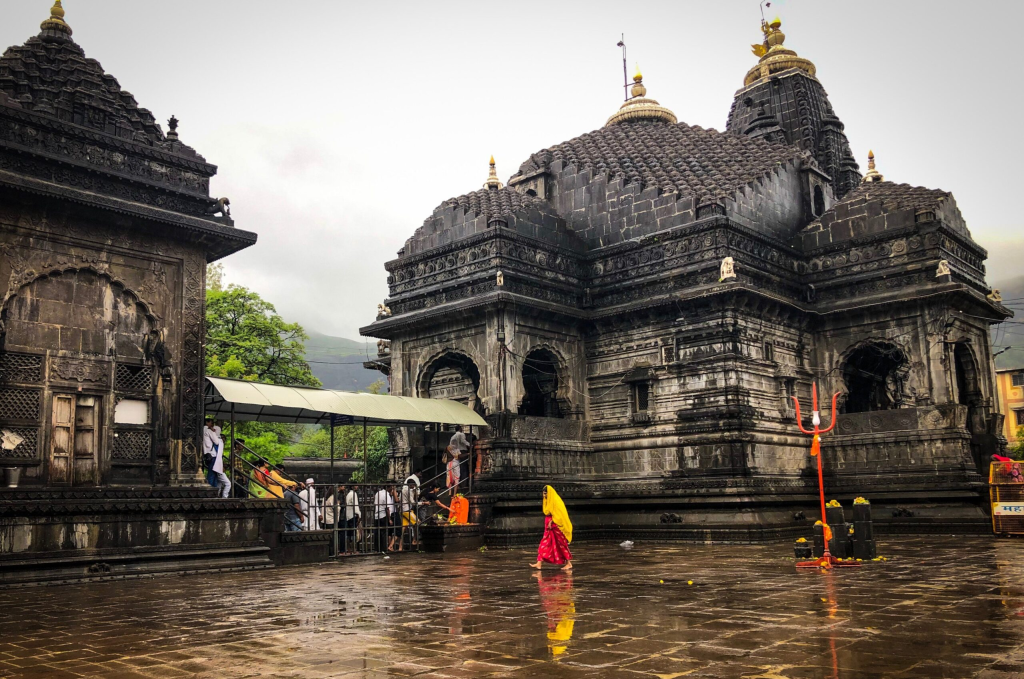
This temple is said to be the birthplace of the Godavari River, one of the most sacred rivers in India, which came from the Brahmagiri hill upon which Shiva appeared when the sage Gautama requested that the Ganga be nearby.
Unlike the other twelve, the lingam of Trimbakeshwar has three faces – for Brahma, Vishnu, and Shiva. The town of Trimbak is in the foothills of the Brahmagiri hill, and the temple itself is an architectural miracle of the Peshwa era, complex, multi-level, and very serious. Nearby, Nashik is the venue of the Kumbh Mela that takes place every 12 years, and the entire region is freighted with the load of pilgrimage in its stones and soil.
Best time to visit: October to March. The years of Simhastha Kumbh Mela witness huge hordes of people – make a plan accordingly.
9. Vaidyanath Jyotirlinga – Deoghar, Jharkhand
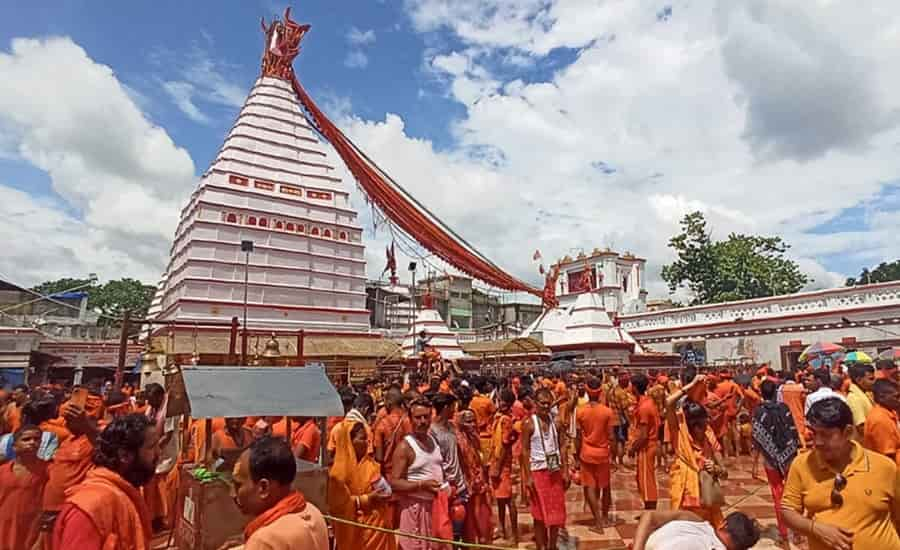
The demon Ravana, king of Lanka, made a big prayer to Shiva at Kailash and offered his own head to Shiva, who came as Vaidyanath, the divine physician, and brought it back one by one, fulfilling Ravana’s desire for invincibility.
Vaidyanath in Deoghar is one of the most visited Jyotirlingas in India, especially during the month of Shravan (July and August) when millions of Kanwar walkers from all over Jharkhand, Bihar, and Bengal bring Ganga water to offer at the Shrine. One of the most amazing things you will ever see in India is this procession of thousands of saffron-clad pilgrims shuffling through the landscape, chanting OM NAMAH SHIVAYA.
Best time to visit: In the month of Shravan for the whole pilgrimage. October to March for a quieter visit.
10. Nageshwar Jyotirlinga – Dwarka, Gujarat
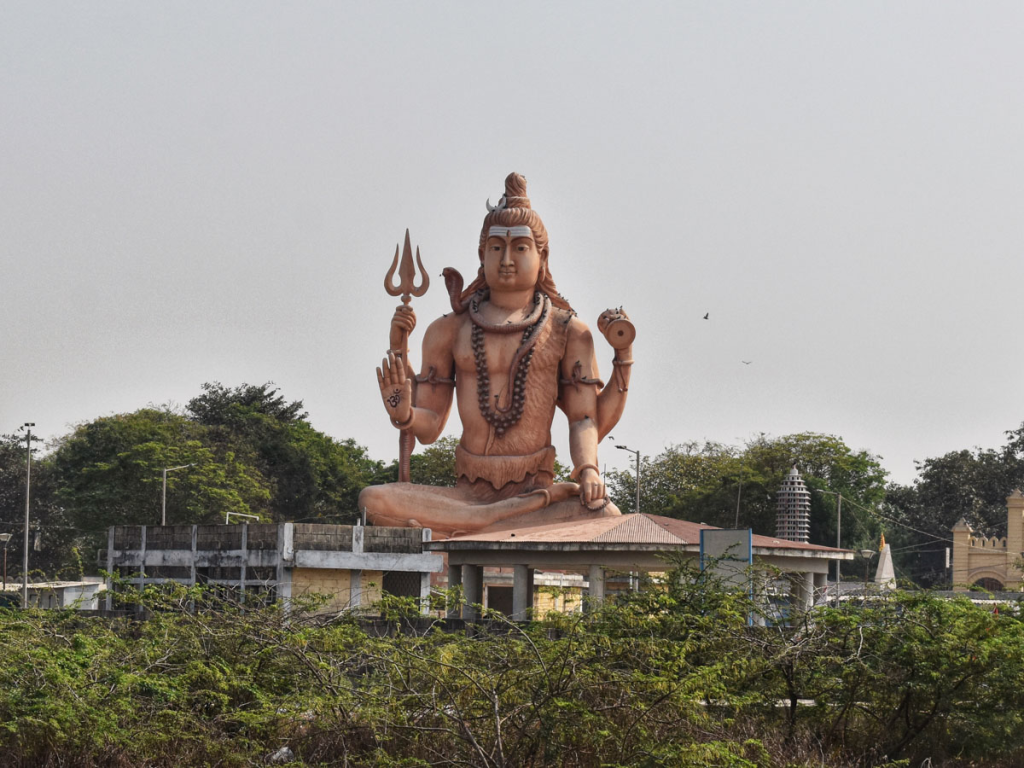
The devotees of Shiva were trapped in the underground kingdom of the demon Daruka. Their prayers managed to reach Shiva, who then appeared as Nageshwar (lord of serpents) and killed Daruka, thus releasing his devotees.
Nageshwar is located near the ancient city of Dwarka, one of the four sacred cities of the Char Dham pilgrimage, which is dedicated to Lord Vishnu. A large statue of Shiva meditating stands in the temple, one of the tallest in Gujarat, and the surrounding flat horizon and sea imparts a contemplative, natural aura to the shrine. This is where there is no sea between you and Shiva, as Nageshwar is a god of open places, protecting and watching.
Best time to visit: The months from October to March. Visit Dwarkadhish Temple to enjoy the full day of darshan.
11. Rameshwaram Jyotirlinga – Rameswaram, Tamil Nadu
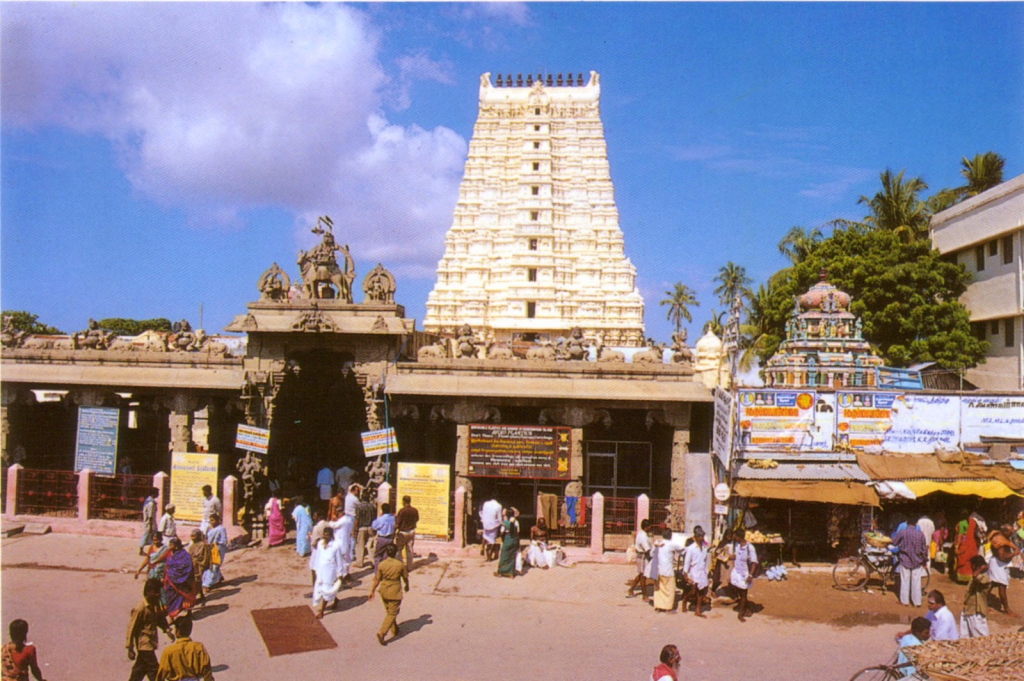
Lord Rama came here, before crossing the sea to Lanka to extract his wife Sita, to pray to Shiva to receive his blessings, and to make amends for the battle. Shiva was pleased and accepted the lingam that Rama’s wife Sita had made of sand.
The island is India at the spiritual extreme, tear-drop shaped, at its southernmost, with the Pamban Bridge linking it to the mainland, across the narrow sea to Sri Lanka. The sea light of the Ramanathaswamy temple here is the longest temple corridor in India, measuring 1200 metres, which appears to extend forever in terms of pillared walkways. There are 22 sacred theerthams (water tanks) in the temple area for ritual bath before darshan. This is a location where Ramayana becomes geography.
Best time to travel: October to April. June and May are not good months to go, the humidity and heat of the coast are very strong.
12. Grishneshwar Jyotirlinga – Ellora, Maharashtra
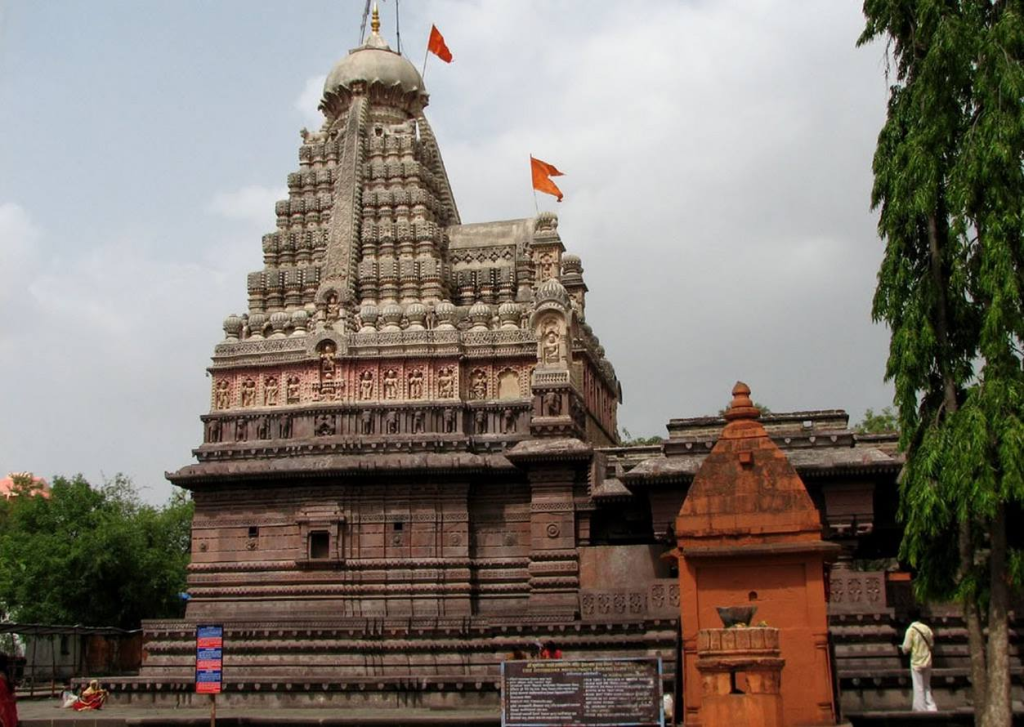
Obstricia Kusuma, a devotee, was so intense in her devotion that she dedicated herself to worshiping the Shiva lingam that she made. Shiva came back to life the dead son of her husband, who had destroyed that lingam, and took birth as the last Jyotirlinga due to the act of grief and grace.
Grishneshwar is the twelfth and final Jyotirlinga, located close to the astounding Ellora Caves, which are 34 rock-cut temples of Buddhist, Hindu, and Jain origin that were carved from the same basalt hillside over a thousand years ago. Despite its small size, the temple is not intimidating, which is quite impressive when compared with some other temples. Pilgrims who have walked all the way from across the country to complete all twelve states say that Grishneshwar, the last of the twelve, is the place where they feel something has settled in them.
Best time to visit: October to March. These two together are one of the most incredible days of any pilgrimage, and they combine the Ellora Caves.
The One Jyotirlinga You Can Reach by Helicopter
Of these, there is only one that is located on the intersection of two great pilgrimages. One of them involves entering the Himalayas. This one alone has attracted millions of pilgrims to ask – annually – how to reach it without the trek.
Kedarnath. Always Kedarnath.
The answer to this question today is Vaayu Aviation, India’s most trusted helicopter operator for Char Dham Yatra, government-approved, and has been in operation since 2006, and has been trusted by more than 6000 pilgrims with a rating of 4.7/5. They offer a 5 Night / 6 Day Char Dham Package, including all four dhams (Yamunotri, Gangotri, Kedarnath, Badrinath) from and back to Sahastradhara Helipad, Dehradun, along with darshan for VIPs, luxury accommodation, all meals, and dedicated ground staff at all the shrines.
The helicopters are specifically selected for high altitude Himalayan terrain, and are the models Bell 407, AS350 B3, and H125. Mountain flying training. Weather monitoring is continuous. And on reaching the helipad at Kedarnath and hiking the last 500m to the temple of Jyotirlinga, none of them can be seen. What you feel here is what pilgrims always feel – the cold, the silence, the mountain, and Shiva.
Experience the excitement of Char Dham Yatra 2026, season open: May-June & September-November. Limited seats. View the complete package, or the Do Dham Yatra Package (Kedarnath + Badrinath) is also available.
Planning Your Jyotirlinga Yatra: A Practical Note
For most devotees, the pilgrimage of all 12 Jyotirlingas is a lifelong experience, which takes many years to complete. They each need their own plan and their own time. However, if you are planning the route map, here is one golden rule that you should follow:
Plan the route for Kedarnath first. This is the most spiritually loaded of all the 12 stops because the Himalayan season is short, the helicopter slot fills up quickly, and the Darshan of Jyotirlinga, as well as the completion of Char Dham, makes this the most spiritually loaded of all stops.
Roughly 60 days ahead of time is recommended by Vaayu Aviation to book for 2026. Kedarnath temple will open on 2nd May 2026. If one is limited to visiting Kedarnath and Badrinath (no visit to the other Dhams), then one can opt for the Do Dham Yatra by helicopter, both as a same-day package and a 3N/4D package. If you are looking for the best of both worlds, no waiting time, and VVIP service, then the Luxury Char Dham Yatra package is for you, as it takes you on the full circuit in 3 nights and 4 days.
Final Verdict
The 12 Jyotirlingas of Lord Shiva are not a list. They are twelve different experiences of an infinite presence – twelve landscapes, twelve mythologies, twelve certain ways of reaching an in-wordless, true thing.
In case you wish to visit the Jyotirlinga, then Kedarnath is your lifeline. Once it’s time to make it real, Vaayu Aviation will get you there safely, beautifully, and on time.
Har Har Mahadev.
